 Auto
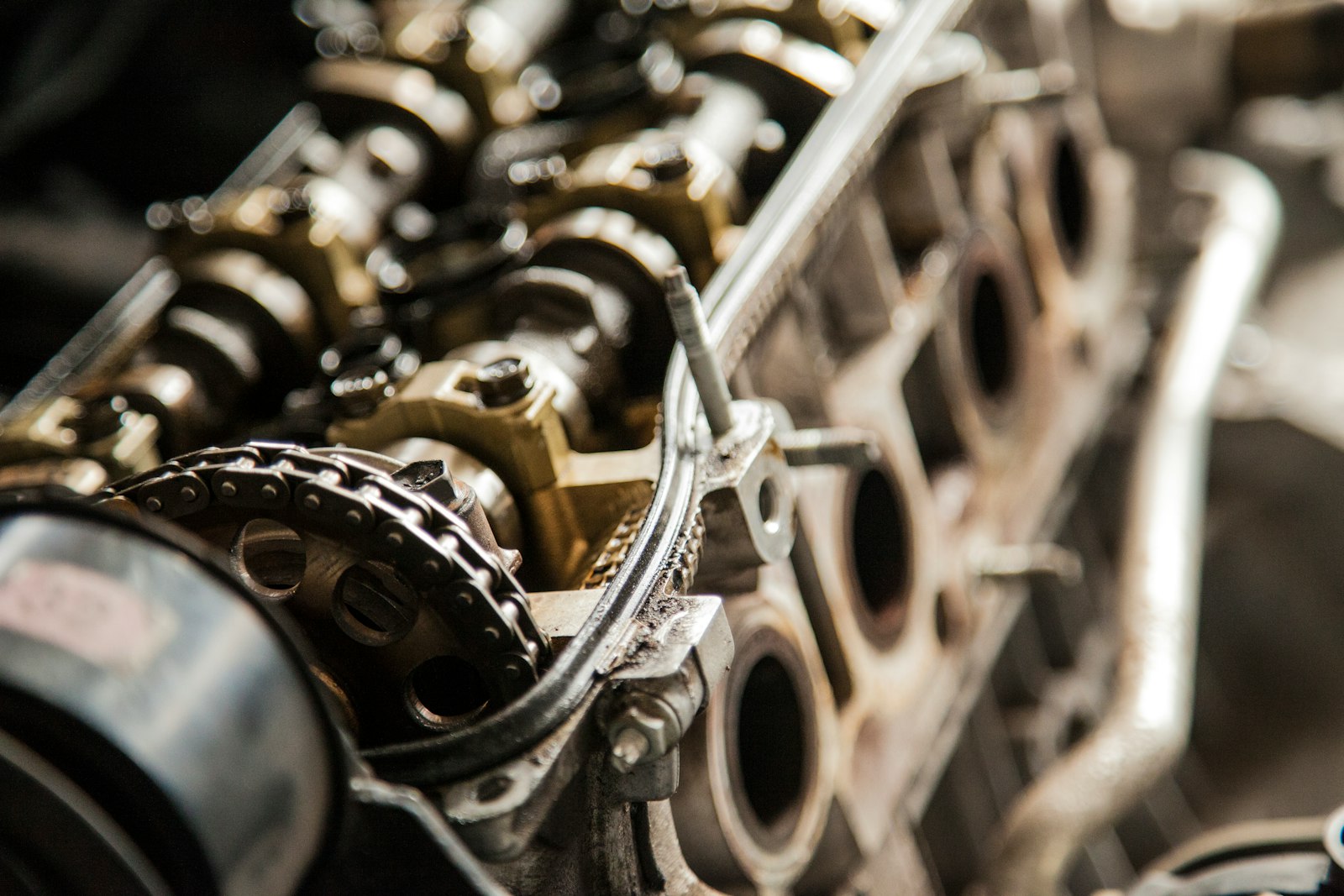
Every petrol and diesel engine has a timing belt or a timing chain that keeps the engine’s moving parts in step. If your car has a belt, it must be replaced on schedule, and on many engines a snapped belt causes serious engine damage. If it has a chain, it is designed to last much longer but is not maintenance-free. When you buy a used car with an unknown history, finding out which one it has is one of the most useful things you can do in the first week.
What the timing belt or chain does
Inside the engine, the crankshaft turns as the pistons move, and the camshaft opens and closes the valves that let air in and exhaust out. The two must stay perfectly synchronised. A timing belt (a toothed rubber belt) or a timing chain (a metal chain, like a bicycle chain) links them. If the link slips or breaks, the timing is lost.
On many engines, known as interference engines, a broken belt or a chain that jumps a tooth lets the pistons hit the open valves. The result can be bent valves and a very expensive repair.
Belt or chain: the practical difference
| Timing belt | Timing chain | |
|---|---|---|
| Material | Toothed rubber belt | Metal chain |
| Replacement | At a set interval in the owner’s manual, by distance or age | Usually no fixed interval; replaced when worn |
| Main risk | Snapping if overdue | Stretching or tensioner wear, often from poor oil changes |
| What it needs from you | Proof of the last change, or a change now | Clean oil changed on time |
Rubber also ages with time and heat, not only with distance. A belt on a low-mileage car can still be due because of its age.
Which popular cars in Kenya use which?
Most modern Japanese petrol engines found in Kenya use a timing chain. That includes the engines in most recent Toyota Vitz, Passo, Axio, Fielder, Premio, Allion, RAV4 and Prado petrol models, Nissan Note, March, Tiida and X-Trail petrol models, Mazda’s Skyactiv petrol and diesel engines (Demio, Axela, Atenza, CX-5), and Honda’s small Fit and Vezel engines.
Timing belts are more common on some older engines and some diesels that remain popular in Kenya. Examples include the older Toyota 1KD and 2KD diesel engines used in earlier Prado and Hilux models, older Subaru boxer engines in Forester, Impreza and Legacy models from before the current engine family, and the Mitsubishi 4D56 diesel in older L200 and Pajero models.
Engines change between years and markets, so treat these as a starting point, not a rule. Check your car’s exact engine code, which is printed on the engine, in the logbook or in the owner’s manual, and confirm with the manual or a trusted garage.
If your car has a timing belt
- Look for proof of the last change. A receipt or a sticker in the engine bay with the date and mileage of the last belt change.
- No proof means change it. On a used car with an unknown history, replacing the belt is cheap insurance against an engine rebuild.
- Replace the related parts at the same time. Garages usually replace the tensioner and idler pulleys, and often the water pump if it is driven by the belt, because most of the labour is already done.
- Write it down. Record the date and mileage in your service book and on a sticker under the bonnet. The next owner will value it too.
If your car has a timing chain
A chain usually lasts for a very long time, but it depends on clean oil to stay lubricated and to keep its hydraulic tensioner working. Engines that have gone too long between oil changes, or used the wrong oil, can wear the chain and its guides early.
Warning signs on a used car include:
- A rattling noise from the front of the engine for a few seconds after a cold start
- A check-engine light with timing-related fault codes
- Rough running or a loss of power that does not have another obvious cause
If you hear a rattle on a cold start during a viewing, ask a mechanic to check it before you buy. A cold start, with the engine not run before you arrive, is the best moment to hear it.
Make it part of your baseline service
When you take a newly bought car for its first full service, ask the garage two questions: does this engine have a belt or a chain, and if it is a belt, when was it last changed? The answer decides whether you need to budget for a belt change now or simply keep the oil fresh.
Every car at AutoYard’s Mombasa yards comes with a written condition declaration, and we tell you whether the engine uses a belt or a chain and what we know about its service. Browse used cars for sale in Kenya or ask us about a specific car.